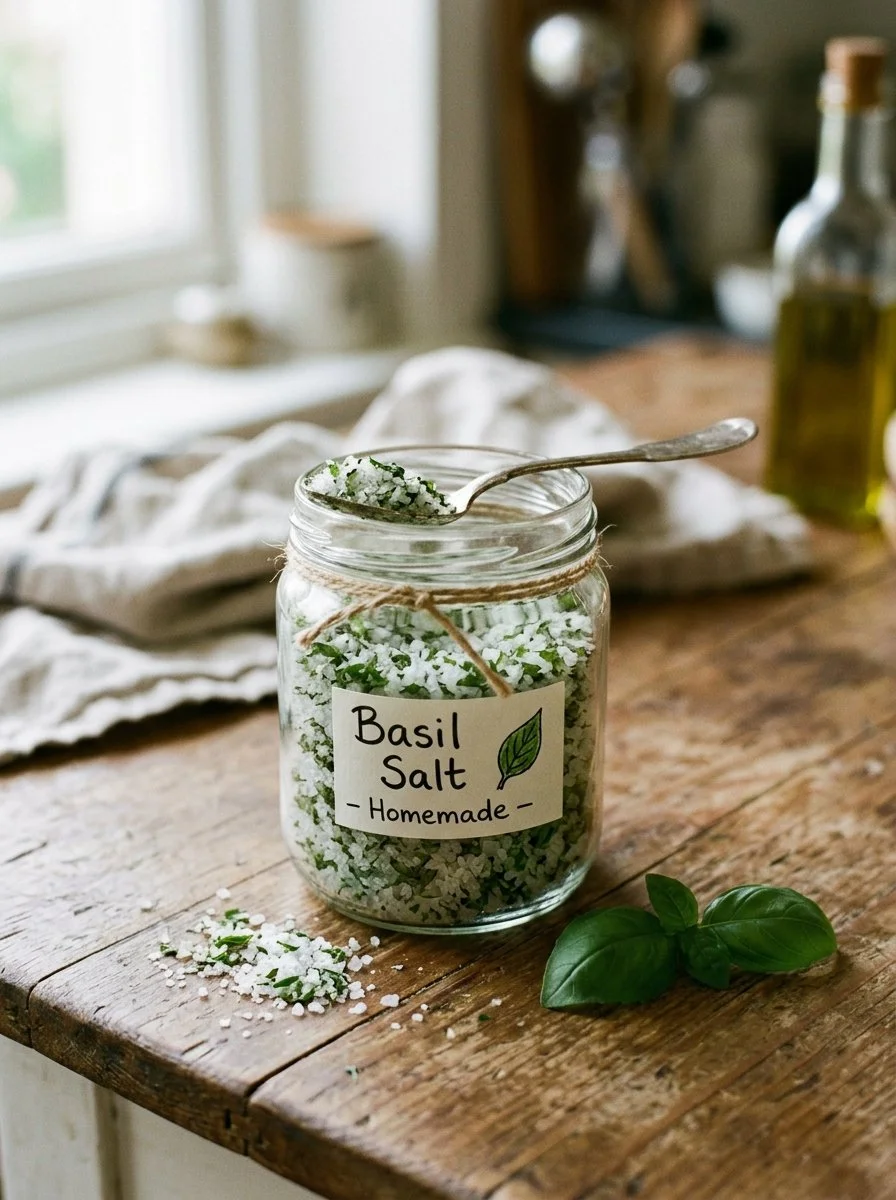
Transform Your Dishes with Homemade Basil Salt
Imagine the first bite as you sprinkle a pinch of homemade basil salt on a fresh tomato salad. The aroma of sun-dried basil fills the air, its fragrance awakening your senses like a gentle breeze on a warm day. The crunch of the coarse sea salt mingled with the silky freshness of the basil creates an explosion of flavor that dances on your palate, both savory and aromatic, making every bite a reward. You may also find Homemade Dill Pickle Mix useful.
The Origin & Heritage
Basil salt is not just a culinary delight but a connection to rich culinary traditions, often evoking fond memories of "Grandma’s kitchen." Originating from Mediterranean cuisines, basil has been utilized for centuries not only as a flavorful herb but also as a means to preserve its essence. Many families celebrate the season by making their own herbal salts, infusing the very essence of summer into their cooking. This homemade basil salt captures that nostalgia and brings a taste of home right into your kitchen.
The Science of Flavor
Understanding the harmony in the combination of ingredients enriches your culinary journey. Here are five reasons why this classic pairing of basil and salt works beautifully together:
- Flavor Enhancement: Salt intensifies the natural flavors of basil, bringing out its aromatic qualities.
- Balancing Act: The herbal notes of basil soften the sharp edge of salt, providing a well-rounded taste.
- Preserving Freshness: Salt acts as a preservative, ensuring the vibrant flavor of basil lasts longer.
- Culinary Versatility: This blend complements a variety of dishes, from pasta to grilled meats.
- Cultural Connection: Traditional regional practices incorporate herbs and salts, creating connections that elevate home cooking.
The Ingredients
-
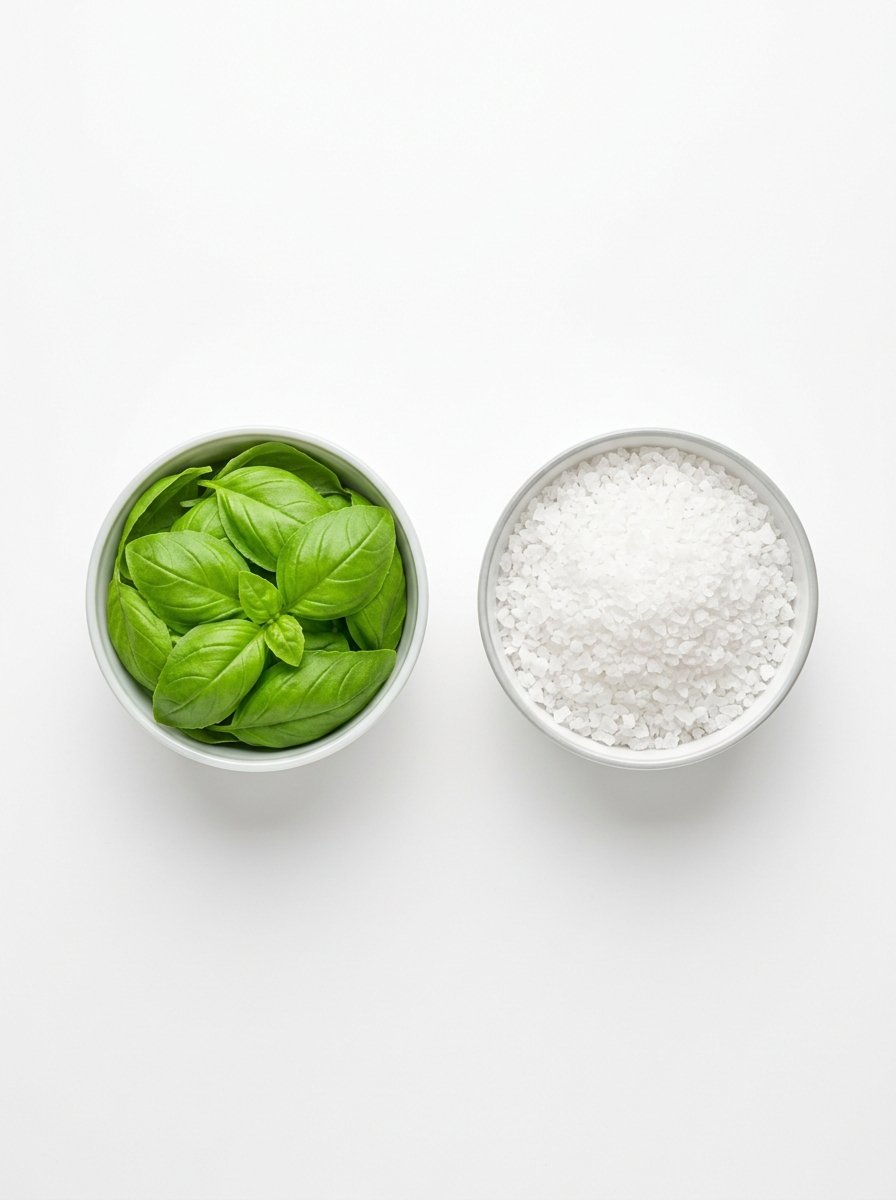
Fresh Basil Leaves
- 1 cup, washed and dried thoroughly.
-
Coarse Sea Salt
- 1 cup for the perfect texture.
Pro-Note: Quality Hack:
- Basil: Choose vibrant, dark green leaves for a more intense flavor profile.
- Sea Salt: Opt for a coarse sea salt, which not only adds texture but also enhances flavor absorption.
The Masterclass Instructions
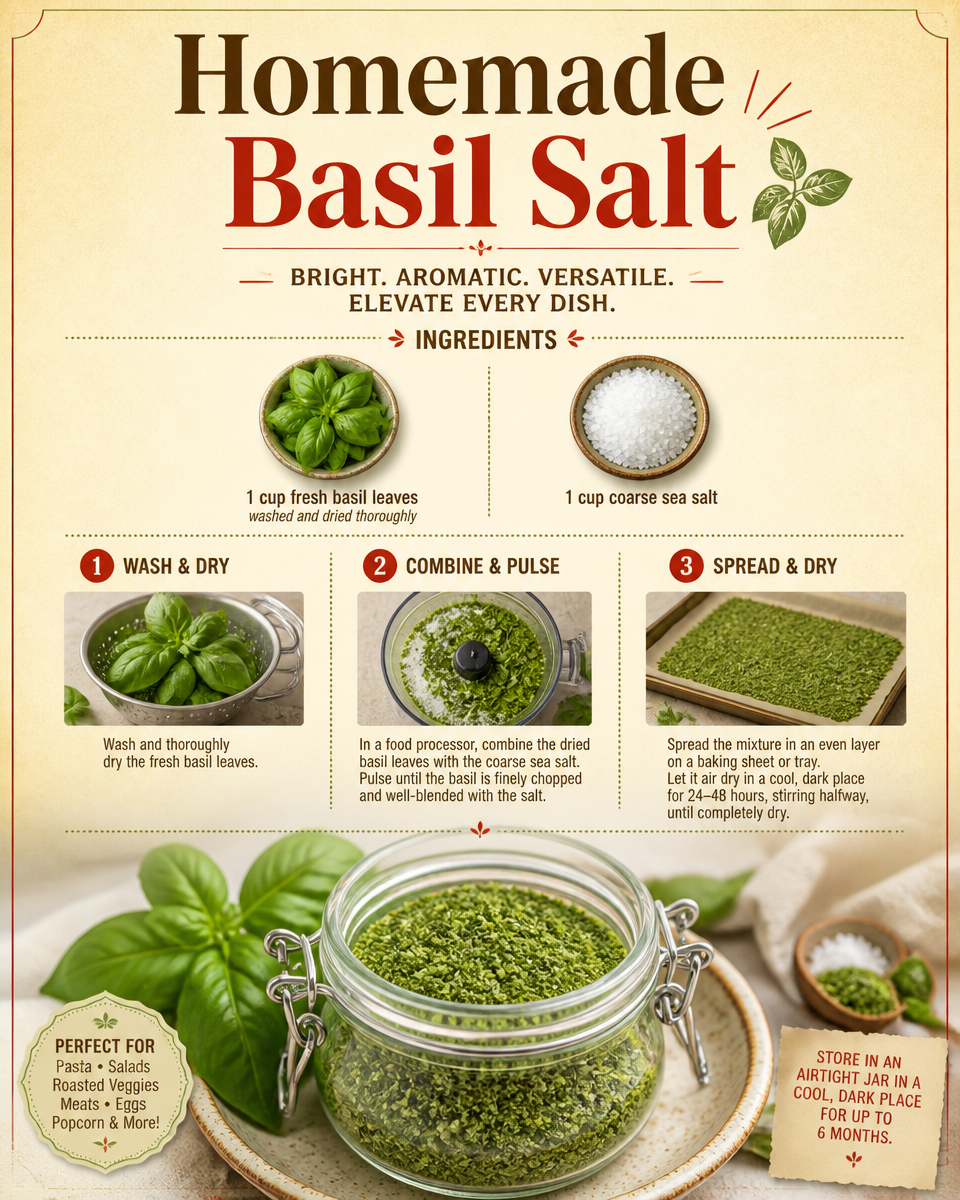
- Preparation: Wash and thoroughly dry the fresh basil leaves to prevent moisture from affecting the final product.
- Blending: In a food processor, combine the dried basil leaves with the coarse sea salt. Pulse until the basil is finely chopped and well-blended with the salt. You’ll know it’s ready when the mixture is a vibrant green.
- Drying: Spread the basil salt mixture onto a baking sheet in an even layer. Allow it to air dry for about 30 minutes or until completely dry, which will concentrate the basil’s flavor.
- Storage: Transfer the dried basil salt into an airtight container and store it in a cool, dark place to preserve its potency.
A Healthier Perspective
To enhance the nutritional value of your homemade basil salt, consider these tips:
- Herbal Boost: Mix in other dried herbs like rosemary or thyme to amplify health benefits and flavors.
- Reduced Sodium: Use less salt and add garlic powder for a flavorful, lower-sodium alternative.
Health Benefits of Basil: Basil is rich in antioxidants and possesses anti-inflammatory properties, making it a wonderful addition not only in flavor but also in supporting overall well-being.
The Troubleshooter
Here are common reasons why your homemade basil salt might not turn out as expected:
-
Too Moist: If your basil leaves aren’t dried sufficiently, the mixture won’t bond well and might spoil. Ensure thorough drying before processing.
-
Flavor Weakness: Using stale or wilted basil can dilute the flavor. Always choose fresh, vibrant leaves for the best taste.
-
Texture Issues: If you pulse the salt and basil too long, you may end up with a paste rather than a salt mixture. Pulse just until finely chopped.
The Art of Serving
Homemade basil salt can elevate your dining experience! Sprinkle it over a fresh Caprese salad, mix it into pasta sauces, or use it as a seasoning for roasted vegetables. A crisp white wine pairs wonderfully with dishes seasoned with basil salt.
The Dietary Lab
You can easily adapt this recipe to fit various dietary restrictions:
- Vegan: Naturally, this recipe is vegan-friendly.
- Gluten-Free: No gluten ingredients are present, making it suitable for gluten-sensitive diets.
Storage & Revival
Yield: Approximately 1 cup
Prep Time: 10 minutes
Cook Time: 30 minutes (drying)
The Revival Rule: When wanting to refresh the flavor, spread the basil salt on a baking sheet and re-dry it in a cool oven to maintain texture and flavor. Avoid using the microwave, as it can ruin the salt’s texture.
FAQ
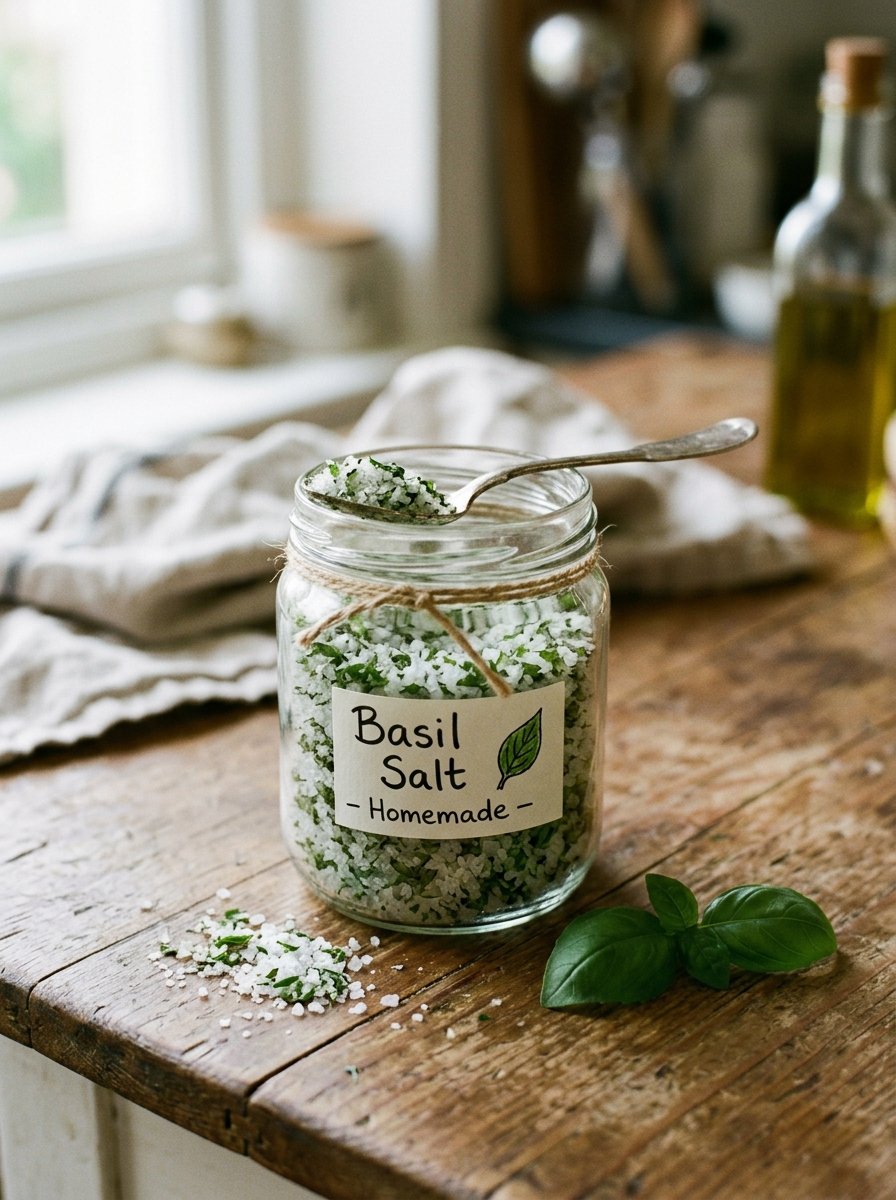
What is the best way to store homemade basil salt?
Store it in an airtight container in a cool, dark place to preserve freshness.
Can I use dried basil instead of fresh?
Yes, but fresh basil will provide a more vibrant flavor.
How long will homemade basil salt last?
It should last for several months if stored properly.
Can I add other flavors to basil salt?
Certainly! Feel free to experiment with garlic or chili flakes for extra flavor.
What dishes pair well with basil salt?
It works beautifully with pasta, grilled veggies, and meats.
Is basil salt healthier than regular salt?
While it contains salt, the added basil can provide health benefits, making it a flavorful alternative.
Can I use pink Himalayan salt instead of sea salt?
Yes, pink Himalayan salt can be a great substitute for its unique flavor profile.
How fine should the salt be?
A coarse texture will work best to maintain the basil’s flavor while providing a bit of crunch.
Can I use this salt for baking?
It’s best suited for savory dishes rather than baking, where precise salt content is vital.
How do I use basil salt in recipes?
Sprinkle it directly on dishes or mix it into dressings and marinades for enhanced flavor.
The Final Bite
Creating your own homemade basil salt is not just a kitchen experiment; it’s a gesture of love for food. Leave a comment below if you tried the Homemade Basil Salt! To further enhance your culinary repertoire, check out related recipes for Homemade Blueberry Bagels, Homemade Buffalo Wings, and Homemade Pad Thai Sauce.
Conclusion
Basil salt is a versatile ingredient that can transform your everyday cooking into something extraordinary. It not only enhances flavors but also adds a special touch to all your dishes. For those looking to explore this delightful seasoning further, check out an easy recipe on making basil salt or browse through this detailed basil salt recipe.
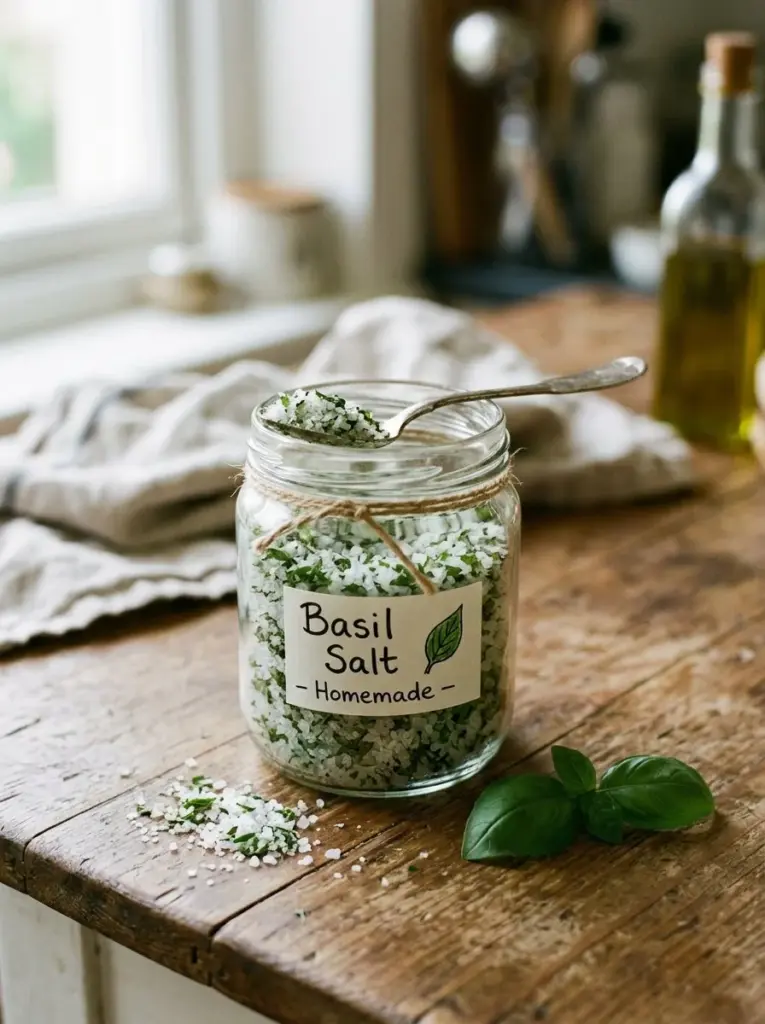
Homemade Basil Salt
Ingredients
Method
- Wash and thoroughly dry the fresh basil leaves to prevent moisture from affecting the final product.
- In a food processor, combine the dried basil leaves with the coarse sea salt. Pulse until the basil is finely chopped and well-blended with the salt. You’ll know it’s ready when the mixture is a vibrant green.
- Spread the basil salt mixture onto a baking sheet in an even layer. Allow it to air dry for about 30 minutes or until completely dry.
- Transfer the dried basil salt into an airtight container and store it in a cool, dark place.